How We Worked With Mattress Factory to Film the Creation of The Hidden Shift
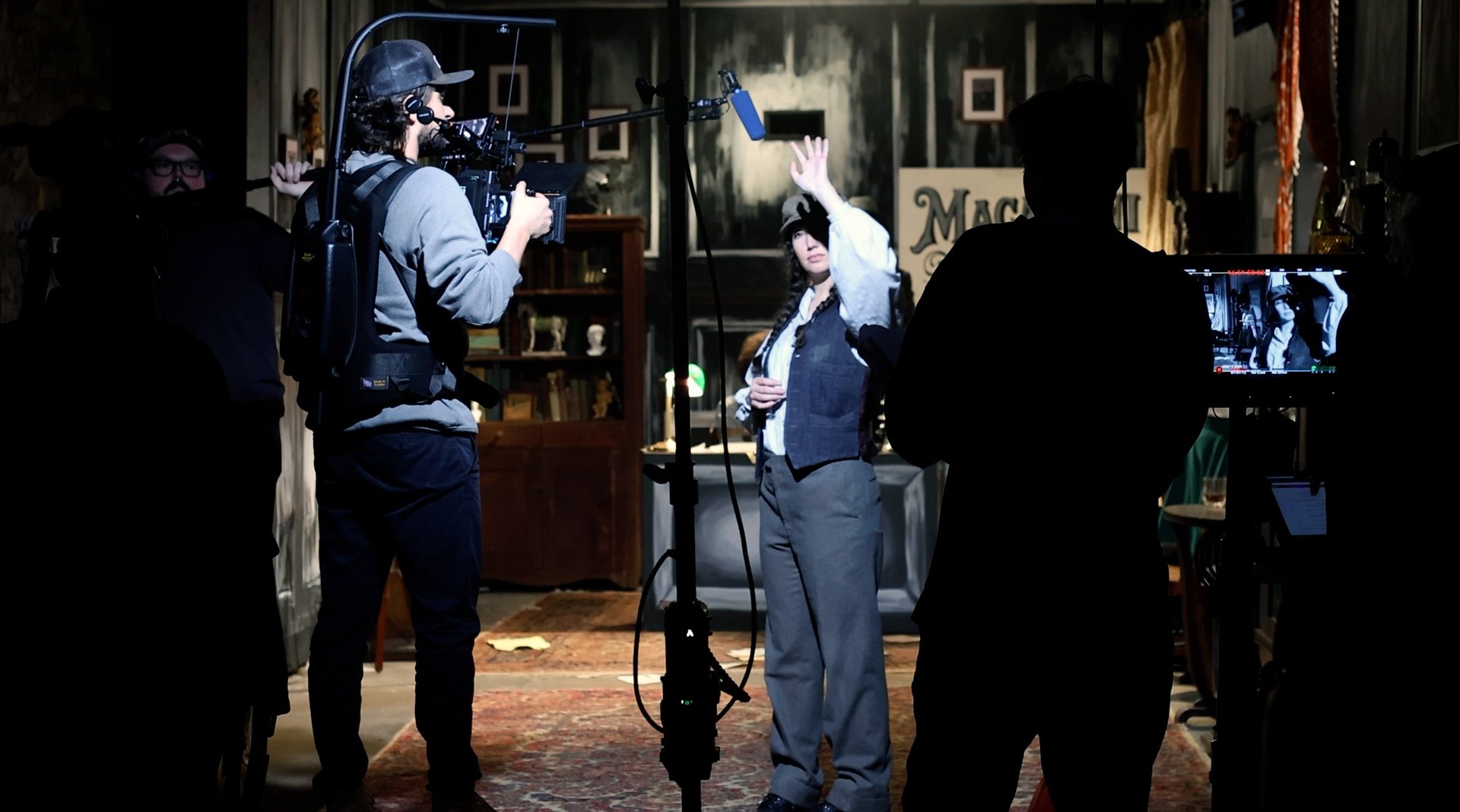
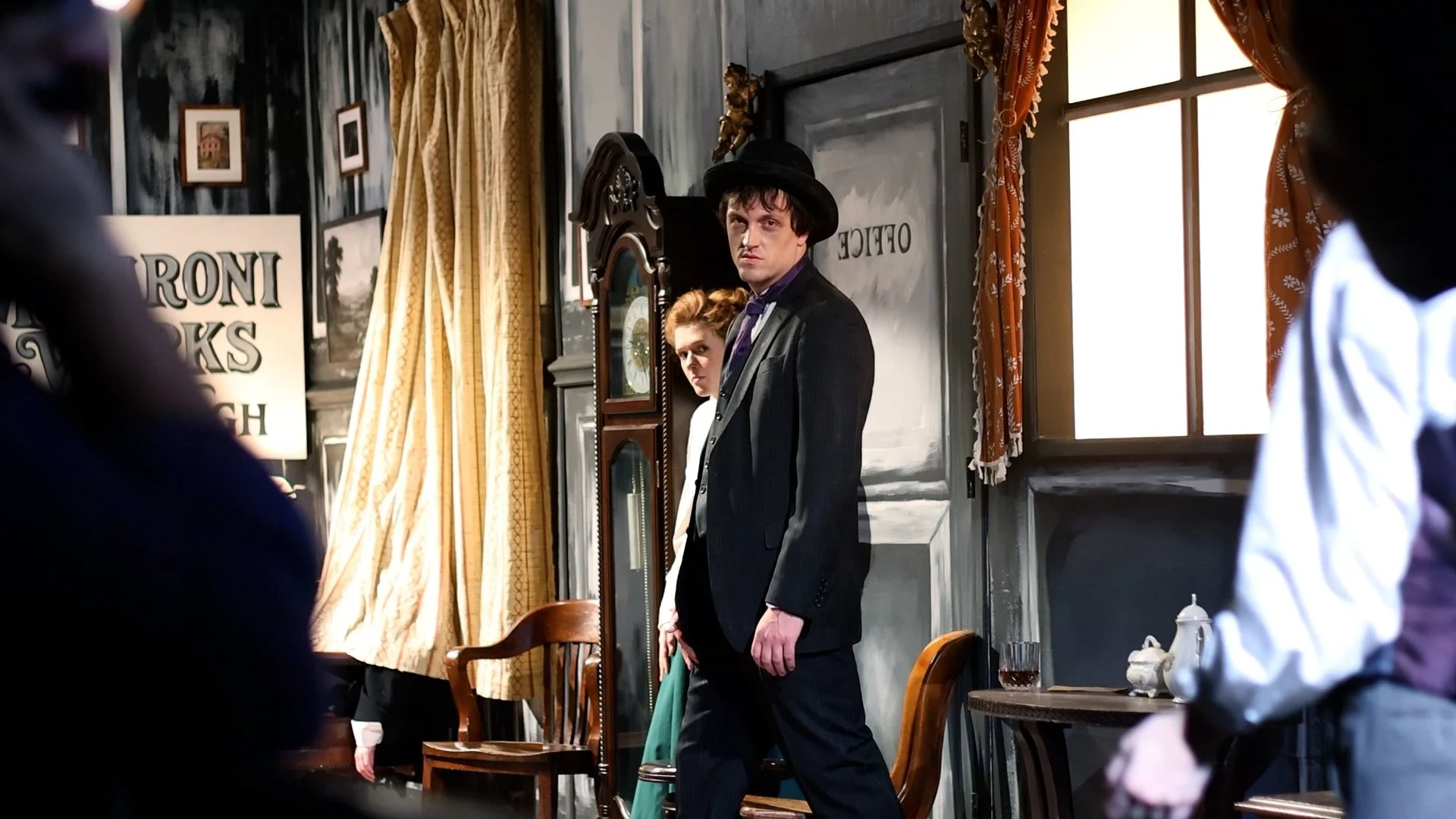
Video still, behind the scenes from The Hidden Shift.
Introduction
Client
Mattress Factory
Industry
Museums
Services
Videography
Founded in 1977 by Barbara Luderowski, Mattress Factory is a museum in Pittsburgh, PA, known for its history of presenting radical and thought-provoking installation art. They offer an international residency program, which has drawn artists like James Turrell, Yayoi Kusama, Damien Hirst, Ann Hamilton, and Hans Peter Kuhn, among hundreds of others. While in residence, artists create exhibitions, which rotate throughout the year in three buildings on the museum’s campus. To learn more, visit. https://mattress.org.
Mattress Factory asked Bright Archives to film behind the scenes moments during the making of artist Ting Tong Chang’s The Hidden Shift, a humorous, film-noir-inspired murder mystery film that riffs on the events of the 1892 Homestead Strike. The two-channel video installation runs from November 22, 2025 - January 3, 2027.
We joined a multidisciplinary team that included museum staff (curators, fabricators, and administrators), a producer (Benny Shaffer), a director (Alex Abrahams), screenwriters (Alex Abrahams, Ting Tong Chang, Yang Cheng Su), a production team, editors (Ahmed Ragheb and Lily Ekimian Ragheb), and many more.
However, this wasn’t your normal film shoot. For one thing, the cast of the film was entirely untrained actors recruited from the museum staff. And then, in another twist, our documentary footage would be edited and included as part of the installation.
Primary Goal
Mattress Factory and the production team asked Bright Archives to film rehearsals, costume fittings, and production shoots. We also conducted interviews with museum staff (aka the film’s cast) and filmed documentation of their work days (sending invoices, working at the front desk, prepping food in the cafe). The goal was to capture examples of labor that could juxtapose and complement the class issues that are explored in the fictional film.
Work
Our work focused on videography and audio recording. Often we filmed with two cameras and internal and external audio. We spent a little over two weeks onsite, including a wonderful evening filming the Pittsburgh Labor Choir singing songs in an outdoor garden.
At the end of each day, we labeled each video and audio file, maintaining strict file naming conventions, and uploaded the day’s results to the production team.
After our portions of the filming were completed, the production team worked to edit two films: a black-and-white fictional film (complete with foley sound effects) and a documentary film that provides a peek into a day in the life of a museum staffer.
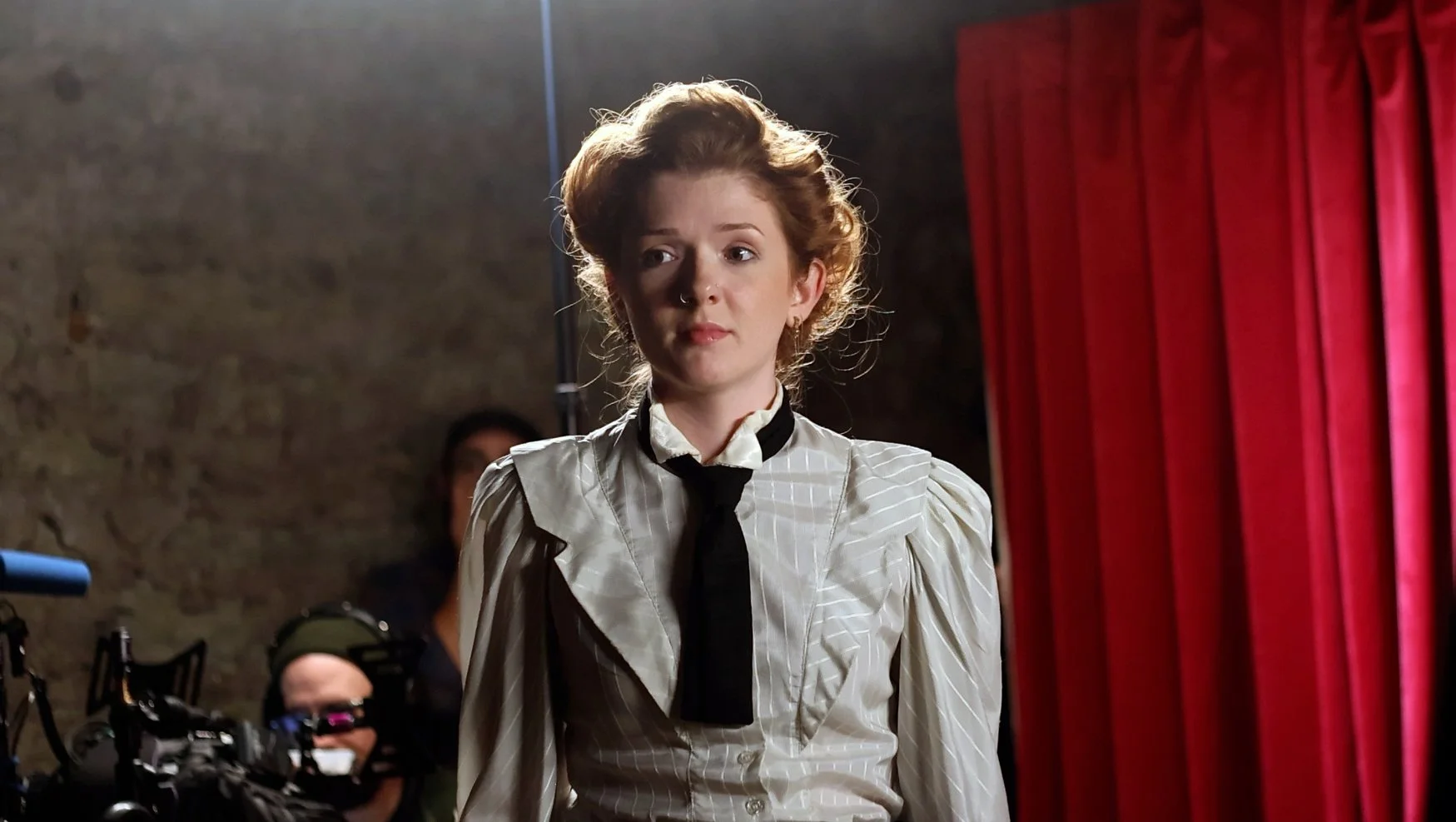
Video still, behind the scenes from The Hidden Shift.
Results
The completed work lives in the basement gallery of the Mattress Factory’s main building. Two screens are set up, one for each film. The piece starts with the fictional film. After some time, it fades to black, and the documentary film begins on the other screen. The films bounce back and forth between screens for 20 minutes. Viewers can sit on benches on the sides of the gallery or between the screens on plush pillows. Surrounding the screens and viewers are elements from the film’s elaborate and detailed set design. The layout of the installation creates an immersive environment that offers layers of facade, representations of labor, and extracts of historical events.
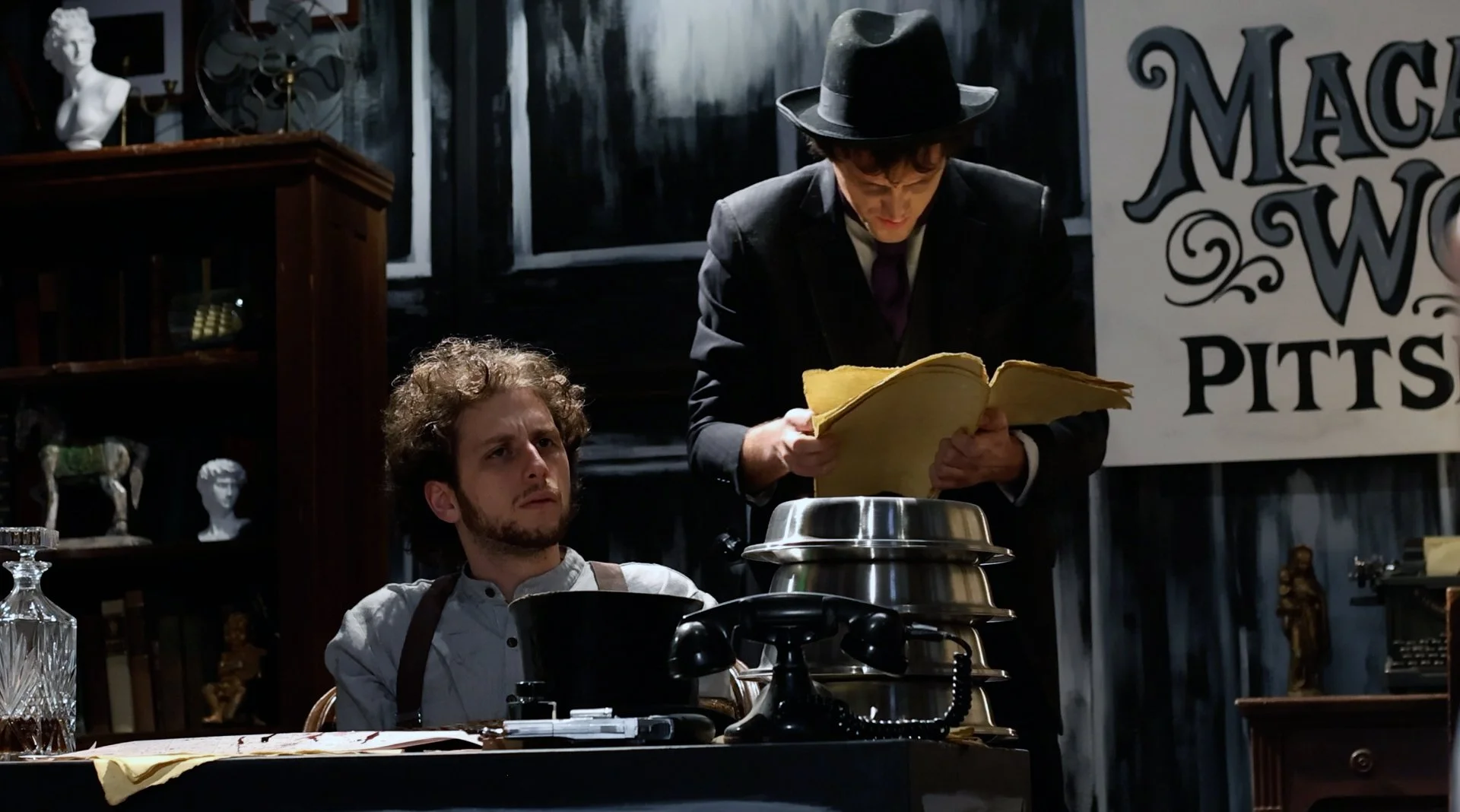
Video still, behind the scenes from The Hidden Shift.
Conclusion
Admittedly, it is a vulnerable thing to turn over raw video footage to a client. Often, in our video work, we shoot much more than we need in the pursuit of engaging sequences. The (digital) cutting room is often littered with footage of us adjusting the camera’s focus, reframing a subject, or just finding our way through the improvisatory nature of documentary filmmaking.
This is all to say that we sent the editors a good amount of outtakes, as per the brief. But we also sent them beautiful footage, filled with candid, unguarded moments, many of which editors Ahmed Ragheb and Lily Ekimian Ragheb (along with Ting, Benny, and Alex) found and incorporated beautifully into the final edit. Filmmakers in their own right, Ahmed and Lily did a wonderful job of balancing the flow and pacing of two very different films that had to be in dialogue with one another.
A trend in many of our favorite projects is collaboration. Whether that collaboration exists with the client or other project team members, it allows for opportunities to learn from each other and to generate ideas that may not have developed in isolation.
It was a pleasure collaborating with Ting, Benny, Alex, and the team at Mattress Factory, and we look forward to visiting the museum to view the installation throughout the rest of 2026.
Do you want to produce a video that documents a process?
Whether you're looking to document the creation of an artwork, an event, or a product, we can help bring it to life. From filming to post-production, we'll guide you through every step.